A secret to the survival of juvenile salmon as they form in their eggs is revealed by a new study from NOAA Fisheries and the University of California, Davis.
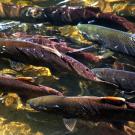
"A vitamin deficiency likely killed as many as half of newly hatched fry of endangered winter-run Chinook salmon in the Sacramento River in 2020 and 2021. These new findings were published in the Proceedings of the National Academy of Sciences [led by CWS Senior Researcher Rachel Johnson].
The Winnemem Wintu tribe’s connection to the winter-run chinook salmon (known as Nur by the tribe) runs deep. The Nur are a part of the creation stories told for generations.
“When we first bubbled out of our sacred spring on Mt. Shasta at the time of creation, we were helpless and unable to speak. It was salmon, the Nur, who took pity on us humans and gave us their voice. In return, we promised to always speak for them.” – Winnemem Wintu Spiritual and Cultural Belief.
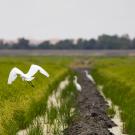
From ducks and cranes to giant garter snakes and salmon, flooded rice fields in California’s Central Valley offer important — often vital — habitat to many wildlife species. Yet uncertainties around crop markets, water and climate can prompt some growers to fallow rice fields or change their management practices.
Will today’s rice acreage under current practices be enough to meet key species’ needs? If not, how much rice is needed? Where should it be planted? And what management practices offer the greatest benefit for species of concern?
Over a century of water and land use changes have led to catastrophic declines in salmon populations in rivers throughout California. Now, a groundbreaking collaboration between state and federal agencies and California’s Winnemem Wintu Tribe is taking a new approach: bringing winter-run salmon back to their ancestral waters above Shasta Dam.
The National Science Foundation has awarded Center for Watershed Sciences Senior Researcher Jonathan Walter and colleagues at the University of Wyoming and New Mexico State University new funding to...
“No one has done the strontium otolith work with any dam removal project anywhere. We’re chasing diversity. This project is the first to look at this question of life history diversity related to dam removal. It will tell us where the fish go, the habitats that they use, and when they leave.” – Robert Lusardi, aquatic ecologist, Center for Watershed Sciences, UC Davis