Jay Lund, Vice Director of the Center for Watershed Sciences and Distinguished Professor of Civil Engineering, and his wife Jean Lund have made a historic donation of $800,000 to the Center for Watershed Sciences. This large and generous gift will support graduate students to engage in interdisciplinary water research, pursue their own interests, and think creatively about how to tackle major water problems.
Are you concerned about aquatic resources? You can shape the research agenda for freshwaters! As described in this recent ASLO Bulletin article, survey is now open and a workshop is planned to evaluate the ‘grand challenges’ in aquatic ecology and help set a future research agenda. Concern about freshwater resources twenty-five years ago led to The Freshwater Imperative (FWI), a research agenda designed to improve our understanding and management of freshwaters.
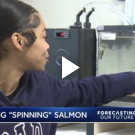
Students in Solano County are working with researchers from UC Davis and NOAA to investigate the mysterious behavior of 'spinning salmon'. A number of years ago, fisheries researchers observed juvenile salmon twisting around in a spiral corkscrew pattern. They believe that the unusual behavior is linked to thiamine — an important vitamin needed for cell function — deficiency in fish returning to inland waterways from the ocean.
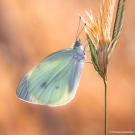
The Beer-for-a-Butterfly Contest is back for its 52nd year, after a 2-year pandemic halt. The contest is open to the public and participants are tasked with finding and collecting the first Cabbage White butterfly of the year in central California, one of the first butterflies to emerge in late winter.
Please join the UC Davis Institute of the Environment Wednesday, Feb. 8, as we host a distinguished panel of experts to discuss the cultural significance of the dam removal, the future of the river, and how climate change may impact the river and its fishes.
The recent onslaught of atmospheric rivers this month has certainly made the headlines. Reservoirs in California are refilling, groundwater is slowly recharging, and the Sierra Nevada snowpack is at 200% of average. So, is California still in a drought? It's too soon to tell. Check out the coverage below to hear what CWS researchers have to say:
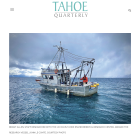
UC Davis' annual Tahoe: State Of The Lake Report highlights a drop in non-native mysis shrimp. Learn more in "Of Mysis and Men" from Tahoe Quarterly, where Geoffrey Schladow, CWS affiliate and director of the UC Davis Tahoe Environmental Center, discusses past population crashes of mysis and what this means for Lake Tahoe in the present.
Congratulations CWS Vice Director Jay Lund on being selected among the AGU 2022 Class of Fellows as a water resource system expert! Dr. Lund receives recognition for establishing a groundbreaking hydro-economic optimization framework for understanding complex water resource systems to inform decision-making.
The US is set to pass the biggest wildlife bill since the Endangered Species Act – the Recovering America's Wildlife Act (RAWA). In an excerpt, media outlet "Vox" chats with Andrew Rypel, Co-Director of Center for Watershed Sciences, about the significance of passing RAWA and the many native species that may finally have a mechanism to get long overdue conservation work.
"Confronting Climate Anxiety" is series in the works for ~one year. The series features Peter Moyle, Levi Lewis, and 6 other environmental scientists across campus to discuss how their work links to climate change and turns climate anxiety into climate action.