The Center for Watershed Sciences is excited to share that a new research project to quantify the relative risk of collapse for fish populations using the Sacramento-San Joaquin Delta has been funded by the California Department of Fish and Wildlife. Congratulations to PIs Jonathan Walter, Danny O’Donnell, Levi Lewis, and Andrew Rypel!
UC Davis Center for Watershed Sciences has received Prop 1 and other state grants to study the contribution of historic managed wetlands to ecosystem functioning in Suisun Marsh. The study will focus on plankton production and fish responses within managed ponds and adjacent sloughs under different management schemes, in an effort to 1) demonstrate the importance of historic working landscapes to marsh habitat; and 2) provide clear management guidance to optimize aquatic food production for both fishes and waterfowl. Read more about the proposed project!
The US is set to pass the biggest wildlife bill since the Endangered Species Act – the Recovering America's Wildlife Act (RAWA). In an excerpt, media outlet "Vox" chats with Andrew Rypel, Co-Director of Center for Watershed Sciences, about the significance of passing RAWA and the many native species that may finally have a mechanism to get long overdue conservation work.
"Confronting Climate Anxiety" is series in the works for ~one year. The series features Peter Moyle, Levi Lewis, and 6 other environmental scientists across campus to discuss how their work links to climate change and turns climate anxiety into climate action.
Synthesis Incubators at CWS will promote synthetic transdisciplinary science collaboration on actionable water challenges. For the 2022 beta competition, CWS leadership expects to award 2-3 teams at a funding level of up to $20,000-$40,000 for a two year time frame. Preference will be given to incubators that (1) are transdisciplinary in scope; (2) engage students as leaders and/or participants; (3) have UC Davis Senate faculty participation (especially from multiple departments and colleges).
The pressure we experience on water in California exerts pressure on freshwater and fish habitat too. However, there are nature-based solutions that could help conserve and manage declining freshwater species. As one example, flooding rice fields in the winter could mimic the natural ecosystem species have evolved in and seems to support quite high survival and outmigration rates of juvenile salmon.
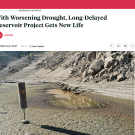
California's drought conditions are worsening and the state is looking at further options beyond local water conservation. There has been debate whether to revive the Sites Reservoir project, a massive and long-shuttered project set for the western Sacramento River Valley. On KQED, CWS Senior Staff Researcher Dr. Ann Willis, weighs in on how dams fit into our long-term water management strategy and why we need to rethink water management in California.
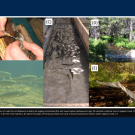
New research on Lahontan cutthroat trout – including growth experiments from 3 LCT strains and insights on the effort to reestablish LCT populations – was just published in PeerJ.
The Klamath Basin is on the cusp of the most ambitious dam removal effort ever attempted. If all goes to plan, efforts will get underway by next year to bring down the four aging hydropower dams that divide the basin in half. Are we ready for this?