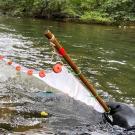
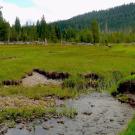
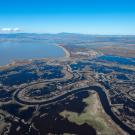
Dave Ayers discusses the state of science and future directions in linking wetland restoration design with functional fish habitat at the Delta-Suisun Tidal Wetland Restoration Symposium.
Using five years of post-treatment data on farm-level water use, we find that water conservation doubles between the first and fifth year of the tax. – Bruno et al. 2023
New research, published in the Proceedings of the National Academy of Sciences (PNAS) has uncovered how kelp forests shape beach food webs and ecosystem dynamics. The study was recently published by Jonathan Walter (CWS Senior Researcher, lead author), Kyle A. Emery, Jenifer E. Dugan, David M. Hubbard, Tom W. Bell, Lawrence W. Sheppard, Vadim A. Karatayev, Kyle C. Cavanaugh, Daniel C. Reuman, and Max C. N. Castorani.
Winter 2024Who – Anyone is welcome to attend. What – CWS Winter 2024 Seminar Series When – Mondays, 3:30-4:30 pm & social afterward Where – Center for Watershed Sciences Conference Room, UC Davis, CA
DateTopic + Speaker(s)
1/8
Welcome + 3-4 X 10-minute short talks + discussion
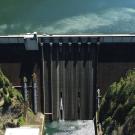
Salmon are trapped behind dams in Oregon's Willamette River Valley, and the U.S. Army Corps of Engineers plans to address the issue by constructing a novel $450 million trap-and-haul style "vacuum" to suck up juvenile salmon and relocate them to large holding tanks, where they will be subsequently transported downstream via trucks and re-released. UC Davis Center for Watershed Sciences researchers Robert Lusardi and Peter Moyle, who published a research article on trap-and-haul programs earlier in 2017, warn that the Corps "should proceed with extreme caution" on the current proposed plan.
In an attempt to rescue California's winter-run Chinook salmon from threat of extinction, an innovative salmon egg incubator has been collaboratively developed by the Winnemem Wintu Tribe and a team of expert fish biologists. The incubator has been engineered to mimic conditions of the McCloud River in California and thus provides a refuge for winter-run salmon eggs while expanding the opportunity for the juvenile fish to refine and navigate swimming in the turbulent artificial currents.
Stream invertebrates often serve as indicators of stream habitat quality because of their responsiveness to environmental change. A recently published study co-authored by Center for Watershed Sciences Senior Researcher Jonathan Walter leveraged 4 decades of measurements in the Llyn Brianne Stream Observatory (Wales, UK) to understand how stream invertebrate communities responded to climatic variation.
“These cold water fish need cold water and that is going to become more limited in California’s climate future on the Valley floor.” – Dr. Rachel Johnson, research biologist at NOAA Fisheries’ Southwest Fisheries Science Center & Center for Watershed Sciences
The Center for Watershed Sciences at UC Davis is seeking to fill an open postdoctoral position. The ideal postdoc will have a strong background in fish ecology and an understanding of stream hydrology of groundwater-dominated and precipitation-derived rivers. The candidate will be responsible for sampling native fishes and analyzing otoliths to assess growth and incubation timing (among other factors) in numerous rivers across California and elsewhere. The candidate will conduct statistical analyses to relate environmental covariates to fish response variables (e.g., growth).
Fall 2023Who – Anyone is welcome to attend. What – CWS Fall 2023 Seminar Series When – Mondays, 3:30-4:30 pm & social afterward Where – Center for Watershed Sciences Conference Room, UC Davis, CA