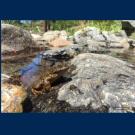
The Center for Watershed Sciences is looking for two field-hardy, ecology-oriented students this summer to assist in a research project investigating the habitat-use of Sierra Nevada Yellow-Legged Frogs (Rana sierrae) in high elevation streams.
The California Extreme Precipitation Symposium is an informal day of scientific and technical presentations meant to increase our knowledge and understanding of extreme precipitation events. Goals of CEPSYM are to improve flood risk management planning and increase warning time for large floods.
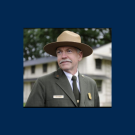
The Muir Institute will be hosting Jonathan B. Jarvis for a special lecture and book signing on his latest book “The Future of Conservation in America: A Chart for Rough Waters.”
The 10th Biennial Bay-Delta Science Conference is a forum for presenting technical analyses and results relevant to the Delta Science Program’s mission to provide the best possible, unbiased, science-based information for water and environmental decision-making in the Bay-Delta system.
This class is a unique opportunity to learn about CA water from a variety of faculty across the larger UC system, as well as a chance for students to meet and interact with other UC students working on water-related issues at different campuses. Lectures and discussions take place online during spring semester (2nd half winter quarter and spring quarter), and the field excursion takes place following the end of spring quarter.
Contra Costa Water District is looking for interns again this summer. The Contra Costa Water District is based in Concord and provides drinking water to central and eastern Contra Costa County.
The Center for Watershed Sciences is hosting a weekly series of public speakers on the Science and Policy of Environmental Flows in California winter, beginning Jan. 17.
Applications are now being accepted for the Master of Science in Environmental Policy & Management (EPM) program at UC Davis. The priority application deadline is January 15, 2018.
A coalition of Dulcepamba residents and their supporters contacted researchers from the Center for Watershed Sciences (CWS) at the University of California, Davis and asked them to complete a forensic analysis of the March 2015 flood and model the hydrology of the watershed.