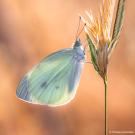
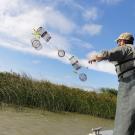
The Beer-for-a-Butterfly Contest is back for its 52nd year, after a 2-year pandemic halt. The contest is open to the public and participants are tasked with finding and collecting the first Cabbage White butterfly of the year in central California, one of the first butterflies to emerge in late winter.
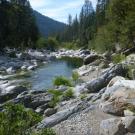
Please join the UC Davis Institute of the Environment Wednesday, Feb. 8, as we host a distinguished panel of experts to discuss the cultural significance of the dam removal, the future of the river, and how climate change may impact the river and its fishes.
The recent onslaught of atmospheric rivers this month has certainly made the headlines. Reservoirs in California are refilling, groundwater is slowly recharging, and the Sierra Nevada snowpack is at 200% of average. So, is California still in a drought? It's too soon to tell. Check out the coverage below to hear what CWS researchers have to say:
We seek to fill a non-tenured, academic term appointment as an Assistant Specialist. This position of Specialist provides technical or specialized expertise (e.g., with instrumentation and research equipment or with social science research methods) in the planning and execution of a research project. Candidates must be apprised of emerging issues and problems and maintain technical competence in the designated area(s) of specialization.
We seek to fill a non-tenured, academic term appointment as a Junior Specialist. This position will aid in interdisciplinary studies of abiotic and biotic conditions that affect the ecology of invertebrate and vertebrate organisms in estuaries. Apply by February 7. View the application and position requirements at https://recruit.ucdavis.edu/JPF05398.
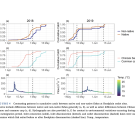
Floodplains are critical fish habitat, but can also strand fish when water recedes; new research shows which cues native & nonnative species use to avoid this fate.
Salmonid numbers are in decline across the western USA. Central Valley spring-run Chinook salmon's evolutionary significant unit (ESU) is extirpated from the San Joaquin River, and reintroduction efforts have resulted in poor survival of juveniles as they swim toward the ocean. Understanding the factors impacting outmigration survival is critical for population reestablishment. However, the effects of habitat variability have largely been overlooked in survival models that try to estimate where this occurs.
The Center for Watershed Sciences at the University of California, Davis seeks to fill an Assistant Specialist position. The research objective of this position is to improve understanding of the impact of water quality, food web dynamics and fish ecology in natural, restored and managed tidal systems in the Sacramento-San Joaquin River Delta. Specialized field, laboratory and data analysis techniques will be utilized to ensure that data are properly collected and analyzed.
The Center for Watershed Sciences at the University of California, Davis seeks to fill a non-tenured, academic term appointment as a Junior Specialist. This position will aid in interdisciplinary studies of abiotic and biotic conditions that affect the ecology of invertebrate and vertebrate organisms in estuaries. Apply by November 15. View application and position requirements at this link: https://recruit.ucdavis.edu/JPF05295.
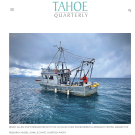
UC Davis' annual Tahoe: State Of The Lake Report highlights a drop in non-native mysis shrimp. Learn more in "Of Mysis and Men" from Tahoe Quarterly, where Geoffrey Schladow, CWS affiliate and director of the UC Davis Tahoe Environmental Center, discusses past population crashes of mysis and what this means for Lake Tahoe in the present.
Congratulations CWS Vice Director Jay Lund on being selected among the AGU 2022 Class of Fellows as a water resource system expert! Dr. Lund receives recognition for establishing a groundbreaking hydro-economic optimization framework for understanding complex water resource systems to inform decision-making.
The Center for Watershed Sciences is excited to share that a new research project to quantify the relative risk of collapse for fish populations using the Sacramento-San Joaquin Delta has been funded by the California Department of Fish and Wildlife. Congratulations to PIs Jonathan Walter, Danny O’Donnell, Levi Lewis, and Andrew Rypel!
UC Davis Center for Watershed Sciences has received Prop 1 and other state grants to study the contribution of historic managed wetlands to ecosystem functioning in Suisun Marsh. The study will focus on plankton production and fish responses within managed ponds and adjacent sloughs under different management schemes, in an effort to 1) demonstrate the importance of historic working landscapes to marsh habitat; and 2) provide clear management guidance to optimize aquatic food production for both fishes and waterfowl. Read more about the proposed project!
The US is set to pass the biggest wildlife bill since the Endangered Species Act – the Recovering America's Wildlife Act (RAWA). In an excerpt, media outlet "Vox" chats with Andrew Rypel, Co-Director of Center for Watershed Sciences, about the significance of passing RAWA and the many native species that may finally have a mechanism to get long overdue conservation work.
"Confronting Climate Anxiety" is series in the works for ~one year. The series features Peter Moyle, Levi Lewis, and 6 other environmental scientists across campus to discuss how their work links to climate change and turns climate anxiety into climate action.